
"YOu can take her out of her village But, you can never take the village out of her."
As proposed, my collection will be focusing wholeheartedly on how Pasifika cultural wear (in specifIcally Samoan) has changed over time and the lack of knowledge today's generation has on the meaning behind the different types of cultural wear.
Fashion has changed drastically over time since the late 1950s and that isn't just in the European/White section of people who exist. Fashion over time has also had a significant impact on the Pasifika people and how we wear our traditional items of clothing today.
I believe Samoan clothing has changed to adjust to the new generations "comfortability" in wearing stylish clothes but in doing so, the originality and the uniqueness of our Samoan attire are slowly starting to fade.
The purpose of my collection will be to help the young Pasifika women and men of today, who are struggling to find their roots; also for those who seek more understanding of the meaning behind our unique Pasifika clothing.
The main themes I will be deliberating on are, understanding the meaning behind our Samoan clothing so that we can discover who we are and not forget our roots.
By putting together this collection I hope you not only understand more about my culture but also take a piece of my ancestors with you.
Below are 10 different but unique Samoan clothing that has changed over time and their meanings.
X. SIAPO/ IE toga -special Samoan mat/flax

Describe your image

Describe your image
Describe your image
O le Siapo (C-ah-poh)
The making of the Siapo is one of the many beautiful gifts our ancestors have passed on from generations to generations. Above is a picture of my Siapo that has been passed down through my family and is now in the hands of the Faulalo's. This particular piece of my collection is very interesting because not only do we tell stories through the way we dance and speak our mother tongue but, our stories are embedded into the dye that runs through these Siapo's. Not only is the Siapo a beautiful piece of art but the making of the Siapo is "art itself"
Siapo is made from the bark of the Paper Mulberry Tree which most people would be surprised to find out as many people think everything Pasifika people make is from a coconut tree. The themes that are portrayed through this piece in my collection is the lack of knowledge today's generation has when it comes to the meaning behind our traditional clothing. For example, did you know that there are originally 13 symbols on a Siapo Piece but, because of modern society take over this symbol has bee left behind in history and is no longer on modern-day Siapo.
Ie Toga - Fine mat, is different from a Siapo but kind of the same (same difference if you know what I mean) This mat is not used as a mat to stand on or play on. This mat is the most precious type of mat in Samoan history of mats. They can be gifts at a funeral or a wedding, they can be wrapped around the coffin of a loved one. The exchange of gifts and mats during special occasions show that the respect is mutual between two or more families and that blood ties will still be connected.
Reference (s) :
http://www.siapo.com/about-siapo.html
IX. Puletasi - WOMENS TRADTIONAL WEAR
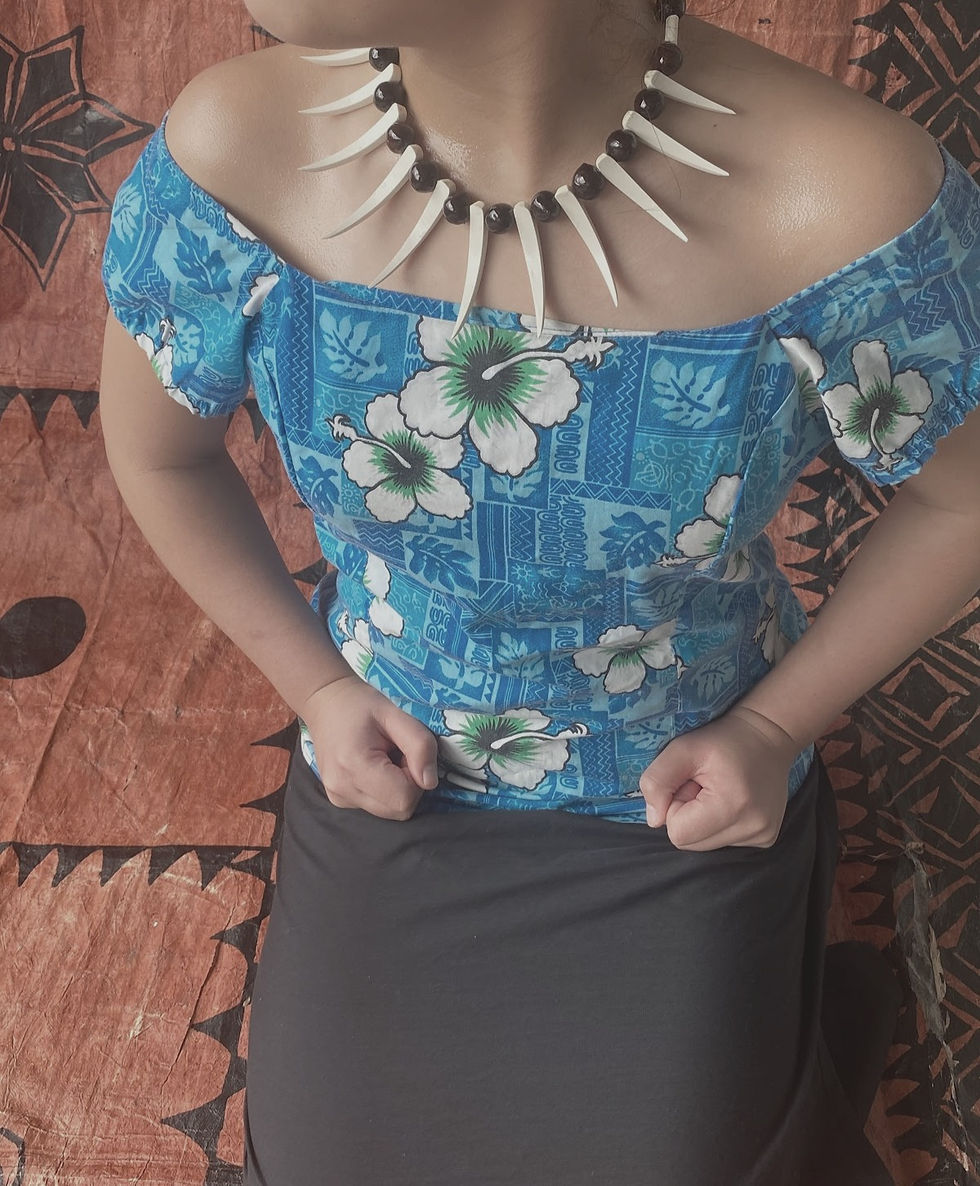
Model: Magnolia Ash-Faulalo
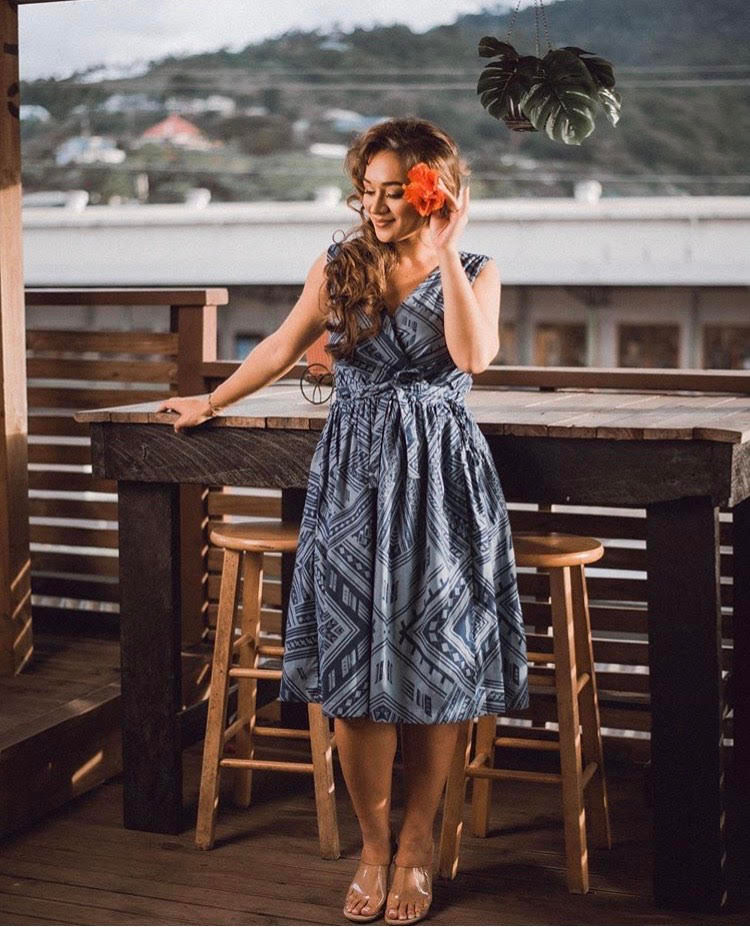
Eveni Model 1 - Modern

Even Model 2 - Modern
Model: Magnolia Ash-Faulalo
Puletasi. (Pu - leh - ta - c)
The Puletasi, my favourite and most heartfelt piece of my collection. Growing up in Samoa I was always dressed up in a two-piece traditional Samoan wear for girls (also called a pea) My nana and papa loved it most when us girls were in our puletasis. The puletasi is probably one of the pieces in my collection that has been hit hardest by modern society fashion the most. Above are pictures of how a two-piece traditional wear has changed to either a tight fitted dress, a ball gown, jumpsuit, pants, skirts - basically, any type of clothing with Samoan patterns has been adjusted to "suit" the modern-day generations and their taste in fashion.
Why do we wear our Puletasi? Well, just like we wear shorts and a shirt this was the traditional Samoan wear for women and still is today. Most puletasis are worn out to church, special family events or in some cases work. When I was schooling in Samoa the women teachers work clothes were Puletasis and men were lavalava. Personally I love the traditional wear of the Puletasi and think that everyone should wear one at least once in their life here on earth.
Anyway, I'm not going to sit here and tell you that the modern-day take over with the puletasi is disappointing, it's rather refreshing to see that our traditional wear has been spiced up a bit by different cultural island brands such as; Eveni Pacific, Mena Design, Tanoa and many more. However, by this take-over my theme is portrayed and that today's generation lacks knowledge of our traditional cultural wear and its significance.
VIii. LAVALAVA - MENS TRADITONAL CLOTHiNG
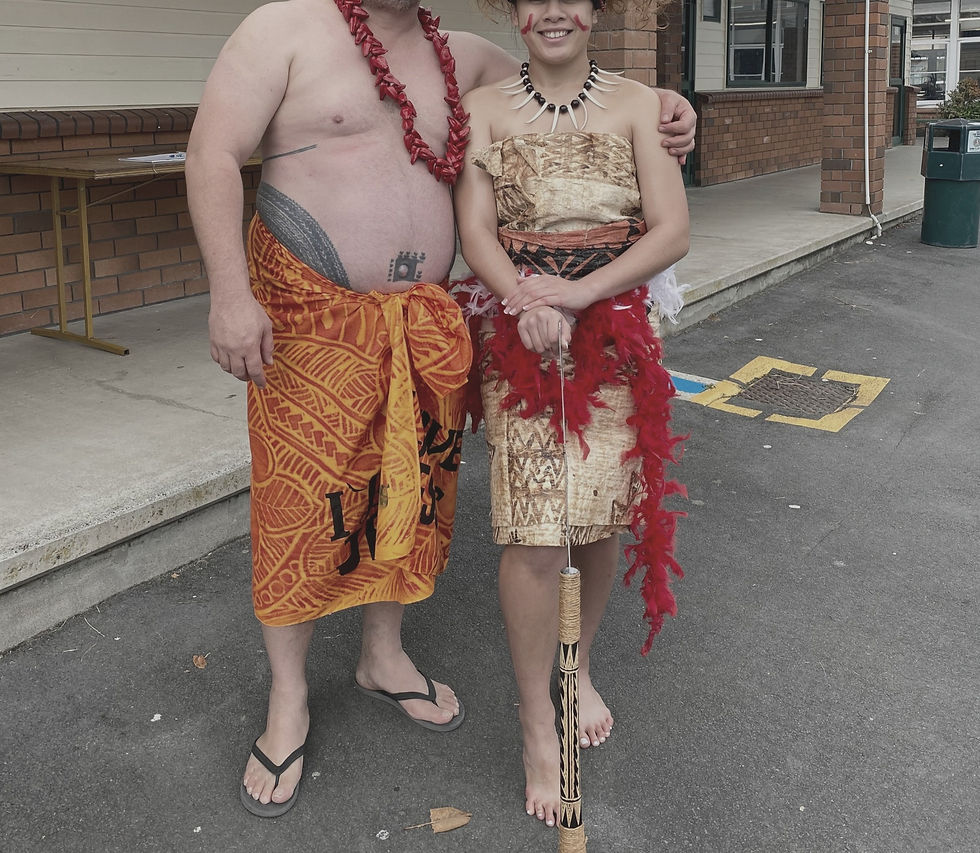
Models: Sepi & Manaui Ash-Faulalo

Modern Day
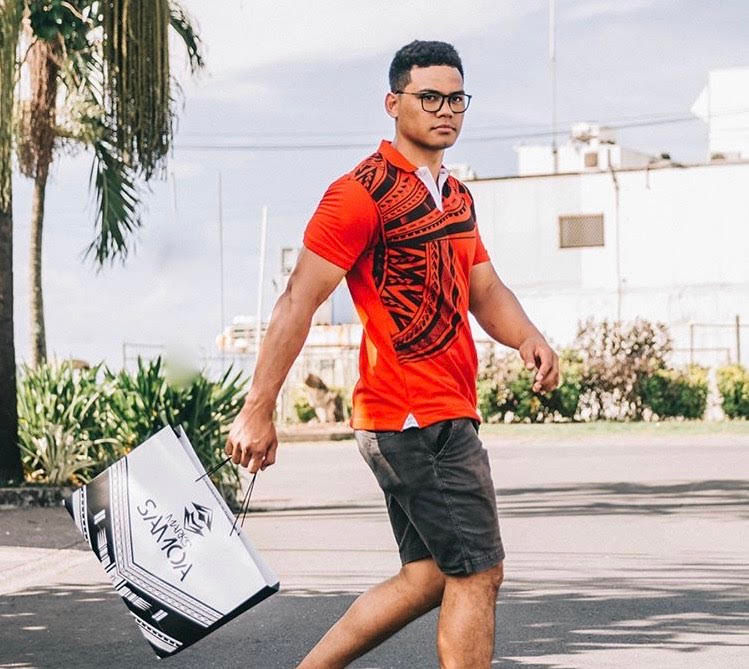
Modern Day
Models: Sepi & Manaui Ash-Faulalo
Lavalava (Lah-vah-lah-vah)
Lavalava has many meanings Samoan clothe wise, but for our Samoan men, it is their traditional Samoan clothing. Above are a few pictures of men in different lavalavas and how their lavalavas have changed over time to "suit" modern-day fashion.
In comparison to the ladies traditional Puletasi wear, the men's modern daywear is simple and still original in some ways. For example, the iefaitaga ( Samoan men's skirt with pockets) has been passed down from generations also. A proper dress shirt with an ie faitaga is the traditional clothing for men who are going to church, a business meeting, work or even on a date.
Lavalava can also be casual wear at home or especially when our guests come over. Wearing an ie Lavalava at home is a sign of respect for our elders and if its girls in a Samoan household we are to make sure that we are not wearing shorts that are too short in front of our brothers, uncles and dad. I hope that today's generation still understands the meaning behind wearing our ie lavalavas at home in front of our parents to show respect.
Overtime fashion has caught up significantly and so has mini skirts so wearing any type of revealing clothes in a traditional Samoan household is disrespectful and considered rude.
vii. ula fala/ULA NIFO - flax necklace
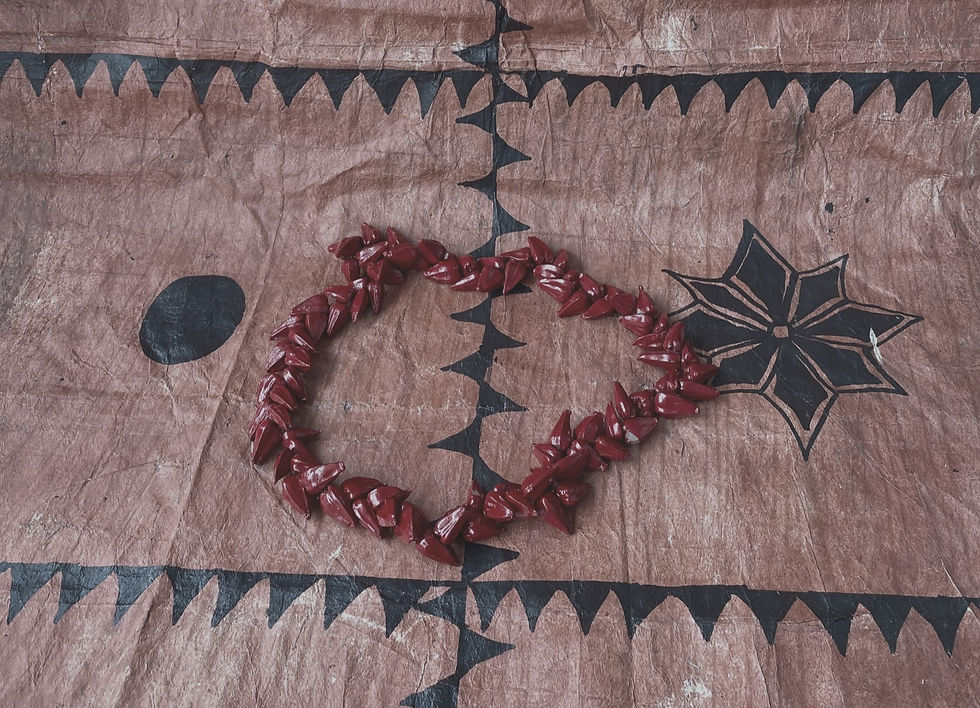
Ula Fala
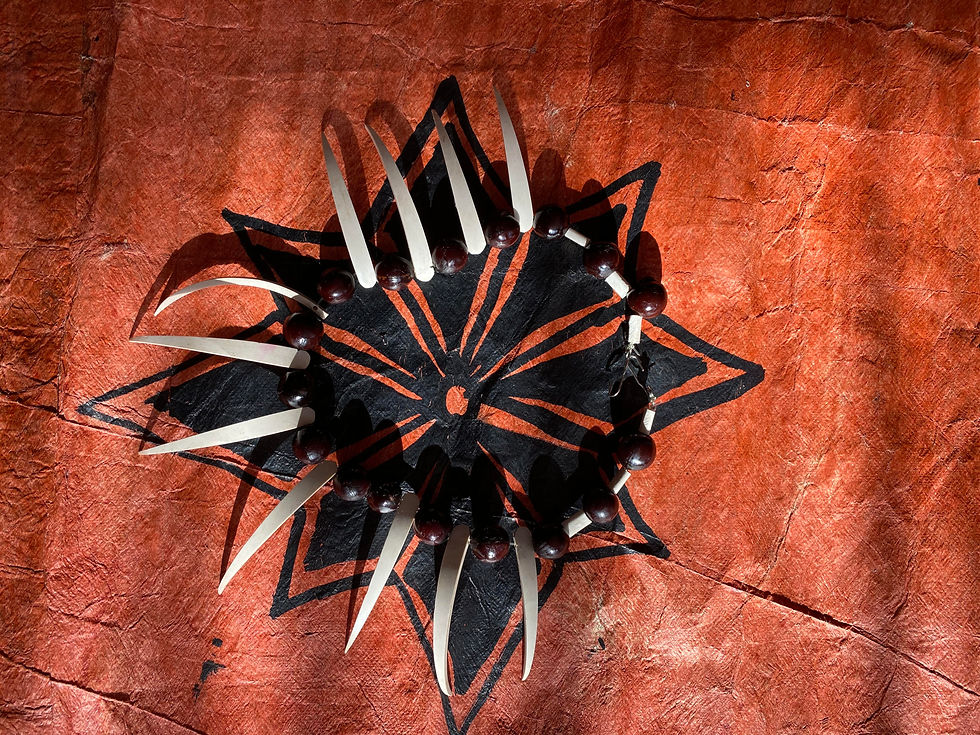
Ula Nifo - Photo taken by Manaui Ash-Faulalo

Ula Nifo - Photo by Manaui Ash-Faulalo
Ula Fala
Ula Nifo (U- lah - knee - foh)
Ula Fala (U - lah - fah - lah)
Our Ula Nifo and our Ula Fala are items I believe are the most underrated items in my collection. Why? Well, would you think something so small would be of big importance? Depends on what they have to offer right?
Did you know that traditionally these necklaces in specifically the Ula nifo were worn only by Samoan high chiefs and their offspring? I guess today's generation wouldn't understand why because it is only a small piece of cultural wear but the meaning behind it speaks so much. The Ula Nifo is made traditionally from the tooth of sperm whales. Yes, a sperm whale, the largest of the toothed whales and the largest toothed predator. Imagine your ancestors standing amongst these 57,000kg sized mammals and carving its teeth into a necklace just to pass it down to you. However, over time it is now being made with leftover bone piece some necklaces I believe are made with wood.
Ula Fala - Just like the ula nifo the ula fala is twice as important and its colour is twice as significant then and now. Above are pictures of the ula fala and the ula nifo, if you haven't already guessed, yes one Ula is red; and that is because the colour red represented loyalty and was a symbol for a high chief/orator. Both Ulas are carved beautifully into their own shapes and thankfully have been passed down from generation to generations with near no mistake. Well, at least I believe so. This brings us back to the fact that the cultural wear that passes through our generations is slowly fading and needs our attention. If we continue to ignore the teachings and the hand-me-down gifts of our elders, will our Samoan traditions carry on fading?
Reference (s) :
https://www.blackpearldesigns.com/products/samoan-ula-nifo-necklace
Vi. NIFO OTI - SAMOAN WEAPON

Nifo Oti

Nifo Oti
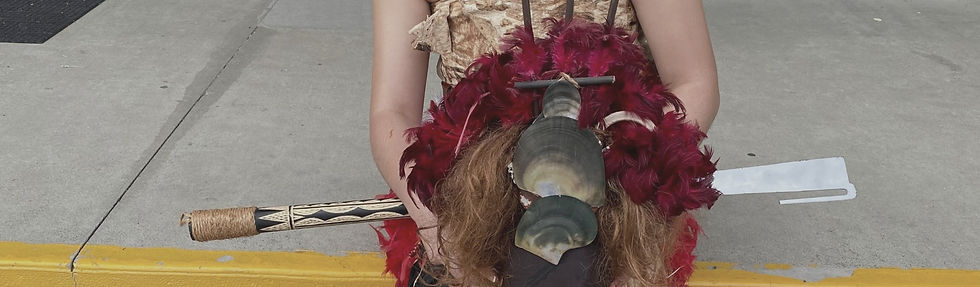
Nifo Oti and Tuiga on Manaui Ash-Faulalo
Nifo Oti

Nifo Oti (Knee- foh - oh - tea)
Nifo Oti. A knife. A sharp knife. A weapon. A warrior.
This particular piece in my collection is interesting because of the fact that it this piece is a weapon. The Nifo Oti has many shapes and different size, the photo above is the Nifo Oti I have in my home. In the early stages of the 1800's war.
Originally the Nifo Oti was used to chop off the heads of other chiefs when going into war. This deadly weapon nowadays is just a decoration for our homes or hidden away until its time to use it for a performance or, like me, an assessment I want to touch home.
The Nifo Oti nowadays can be used for dancing instead of war. One of the ways I have used the Nifo Oti is by doing a Taualuaga as shown in the video above. Learning how to gracefully dance with a stick is hard when all you want to do is spin the heck out of it. Today's generation needs to understand the originality of the Nifo Oti and how it hasn't always been a steel knife.
The Nifo Oti is also used in fire dancing. There are different sized Nifo Oti that suits the nature of the performance, for example, the smaller the fire knife stick the easier to spin the faster the fire goes round and round.
Reference(s):
v. SEI - FLOWER

Picture by Manaui Ash-Faulalo

Picture by Magnolia Ash-Faulalo
Picture by Manaui Ash-Faulalo
Sei
A simple piece of my collection that I thought I'd add-in. Wearing a sei in your ear isn't just for women, everyone can wear a sei. And as I always like to say, you're never fully dressed without your sei. This is probably the only piece of clothing we've managed to pass down through generations without changing it apart from making artificial seis and selling them online.
Wearing a sei is all you need to feel at home again. Every day before I went to school in Samoa I used to pick the finest hibiscus from my hibiscus garden (with mums permission of course) and give them out to all my teachers (only my favourite teachers) This was my token of respect and love I had for my teachers at the time and still do.
By simply wearing a sei I feel beautiful and confident in my skin. Wearing a sei probably won't mean much to today's generation but just like I said something so small could have a massive impact on your life - but you just don't know it yet.
Wear a sei today
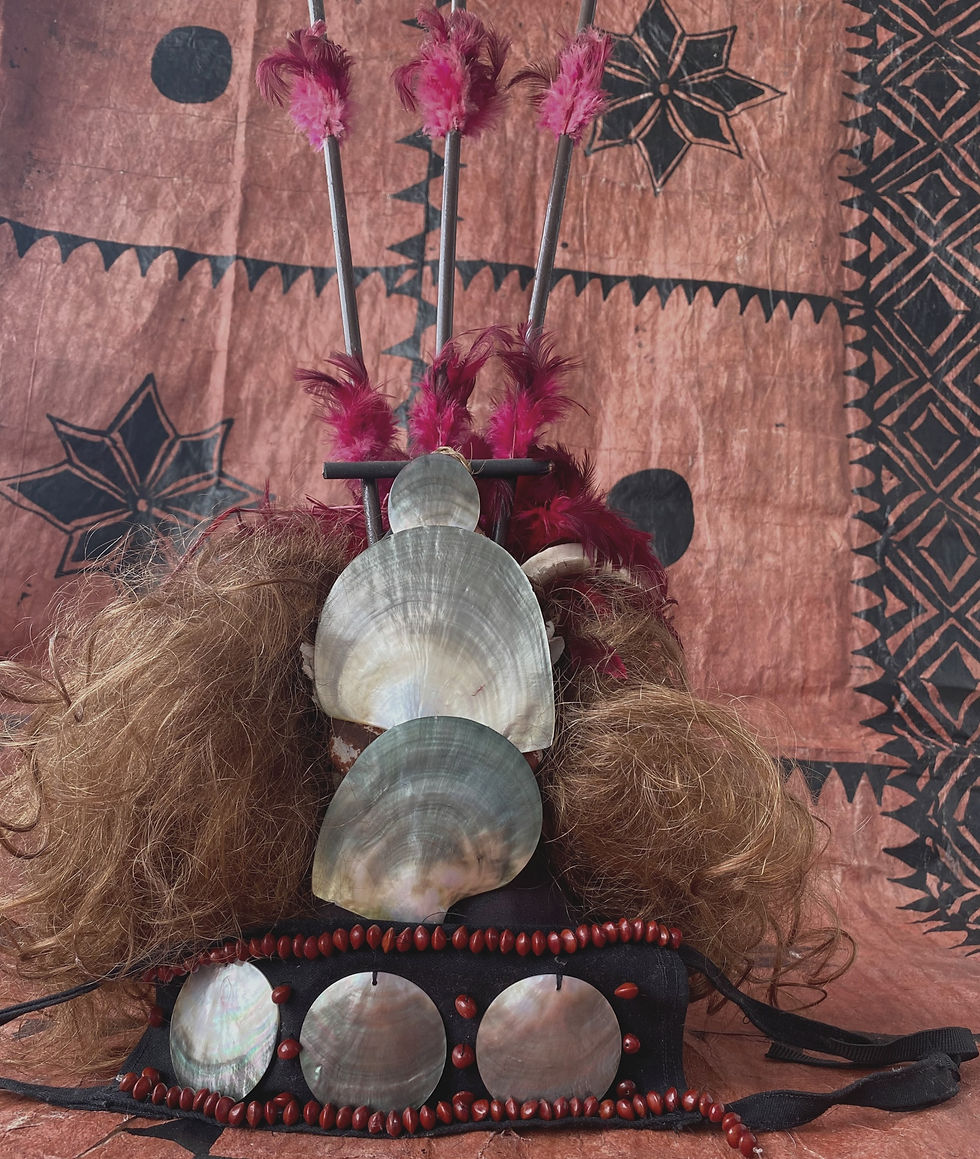
iv. TUIGa - Samoan headdress
Describe your image

Describe your image

Describe your image

Tuiga (Two- e - ga)
Tuiga, only to be worn by a Taupou or Manaia- the daughter or son of the high chief. Traditionally the Tuiga wasn't just one simple "hat" you could put on. From the time of our ancestors, the Tuiga was assembled step by step by certain urban materials such as real hair, cloth, string, feathers, shells, coconut husks and smaller different materials. This piece is my favourite piece in my collection because I have my own Tuiga. The Tuiga is only to be passed through your own family members and with the passing of the Tuiga comes the title of your family along with where you come from. Wearing the Tuiga isn't more than just a crown, it's the piece to the puzzle.
The story behind the making of the Tuiga is beautiful and meaningful at the same time. I can guarantee that my generation will automatically think that the Tuiga was traditionally worn by our Samoan women at first but I can assure you that our Tuiga was created by a Samoan man named Lele (Tautai of King Manu'a) unknowingly Lele created one of Samoas most symbolic and significant cultural piece of Pasifika precious treasure of all time.
When I'm wearing my Tuiga and I Siva (Samoan dance) with it I can feel my ancestors flow through my body and into the soul, telling my audience my story through the way I move, gracefully but always having my guard up at the same time. The themes that are portrayed in this particular piece is to understand the meaning behind the Tuiga and its originality.
https://www.thecoconet.tv/coco-talanoa/guest-writer/o-le-tala-o-le-mafuaaga-o-le-tuiga-the-origin/
Iii. MALU - samoan womens tattoo

Malu

Malu
Malu
Malu (Mah - loo)
Our Samoan Malu means "to protect" to shelter, to secure. This piece of my collection is so important to me because I feel like today our Samoan girls are taking advantage of our malu and not realising the title you now carry with the ink that is now inside you, inside your skin, inside your flesh and blood.
Malu will forever be a touchy subject for me due to the fact that my culture is so sensitive to me I would do anything to protect it. You know, if you loved something or someone so much you wouldn't let anything or anyone take advantage of them/it. That is exactly me with our Samoan traditional malu. It is not something you can take advantage of, it is not those fake tattoos with gum you can just stick on your body for the lols. The Malu is a powerful message written on your skin, the stories of our ancestors sunk into our skin for the next generations to learn from.
Tradtionally the Malu is tatted with a comb, shell plate and wooden handle (as shown above)
Unlike the men, the women Malu is less dark and is more simple to the eye. However, the diamond behind the legs of the malu will always be tatted as it is the main symbol for the word "Malu"
Reference(s) :
Ii. PE'A/SOGA'IMITI- SAMOAN MEN TATTOO

Sepi Faulalo's pe'a
Sepi Faulalo's pe'a
Sepi Faulalo's pe'a
Pe'a (Peh - ah)
Soga'itmiti (Soh - gah - e - me - tea)
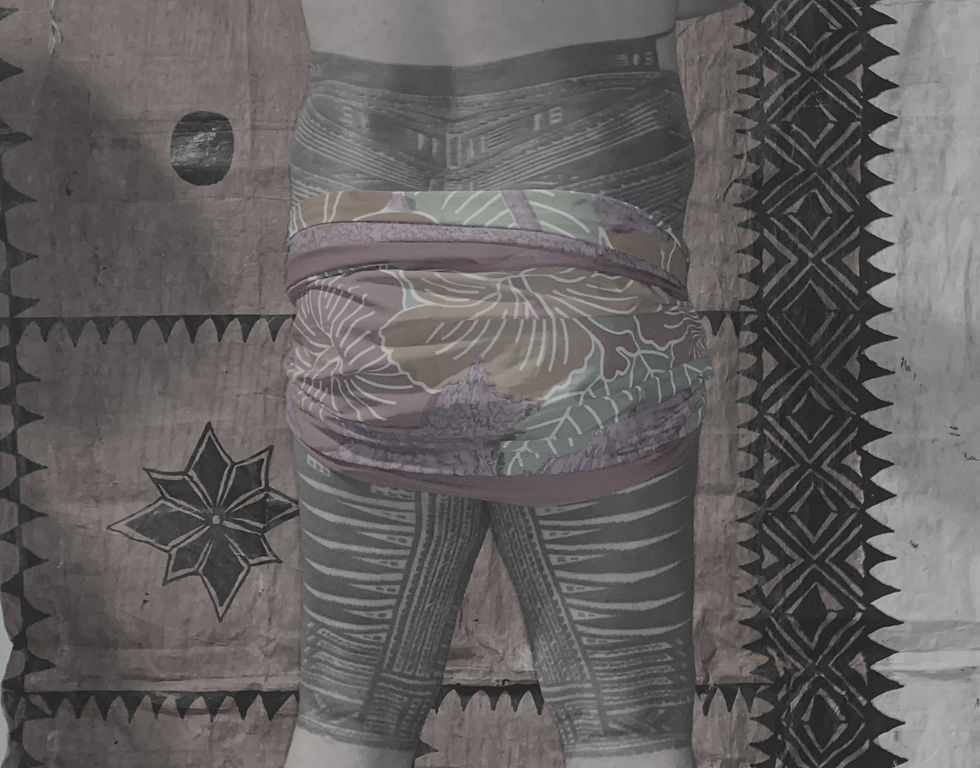
Above is a picture of my Father's pe'a. He has had his pe'a for 18 years now, his matai name is Le Ala I Salanoa, his name is Sepi. I asked my dad what is the meaning behind your pe'a, his reply - "My Pe'a represents my family. The tattoo that runs through my skin symbolizes our bloodline. The tattoo that runs through the side of my ribs represents the va'a - the foundation of our family. The Pe'a that runs down my legs represents our roots our aiga. My Pe'a completes me, it's who I am I did it for my Nana Bella and when she became an angel I was lost. The only piece I have of her is in my skin, this Pe'a is my family. This Pe'a is me"
Pe'a a surreal piece of my collection as this is a piece my father has had since I was born. Just like the Malu the Pe'a isn't just a sticker, it is our ancestors being passed on by generations to generations. The Pe'a is tatted by using 3 main tools which are the same when tatting a malu - a comb, a shell plate and a wooden handle. The theme that is portrayed in this piece is the lack of knowledge today's generation has on the meaning of the pe'a.
Reference(s) :
i. Gagana fa'asamoa - samoan mother tongue

Samoan flag paint brushed

Samoa's Islands and it's flag inside it
Samoan flag paint brushed
Last but in today's generation definitely the least is our mother tongue.
Tell me. Whys is it that once a year on the month of may everyone wants to learn Samoan phrases. Why can't we put this energy into actually learning our roots, asking our parents or a simple web search about our culture won't hurt.
Migrating from Samoa has probably been the hardest thing I've faced in my life because once I boarded that Air New Zealand plane my mother tongue was left behind and every day I think of her. Every day I try to make her happy by speaking Samoan at work, speaking Samoan to my siblings and even answering my parents in Samoan. The modern-society take over has impacted us all - not just one person. It has been a real barrier to me learning more about my culture and I honestly don't blame our generation. Is it our fault that we are such a lazy generation that relies on modern technology to tell us what the weathers going to be like tomorrow - yes. This generation is a strong generation that is going through so much in the year of 2020. I hope that people have the same fire and energy they do in supporting #BLM to also spark a fire in their soul to fight for our mother tongue.
Tofa Soifua,
Manaui Ash-Faulalo